Author: admin

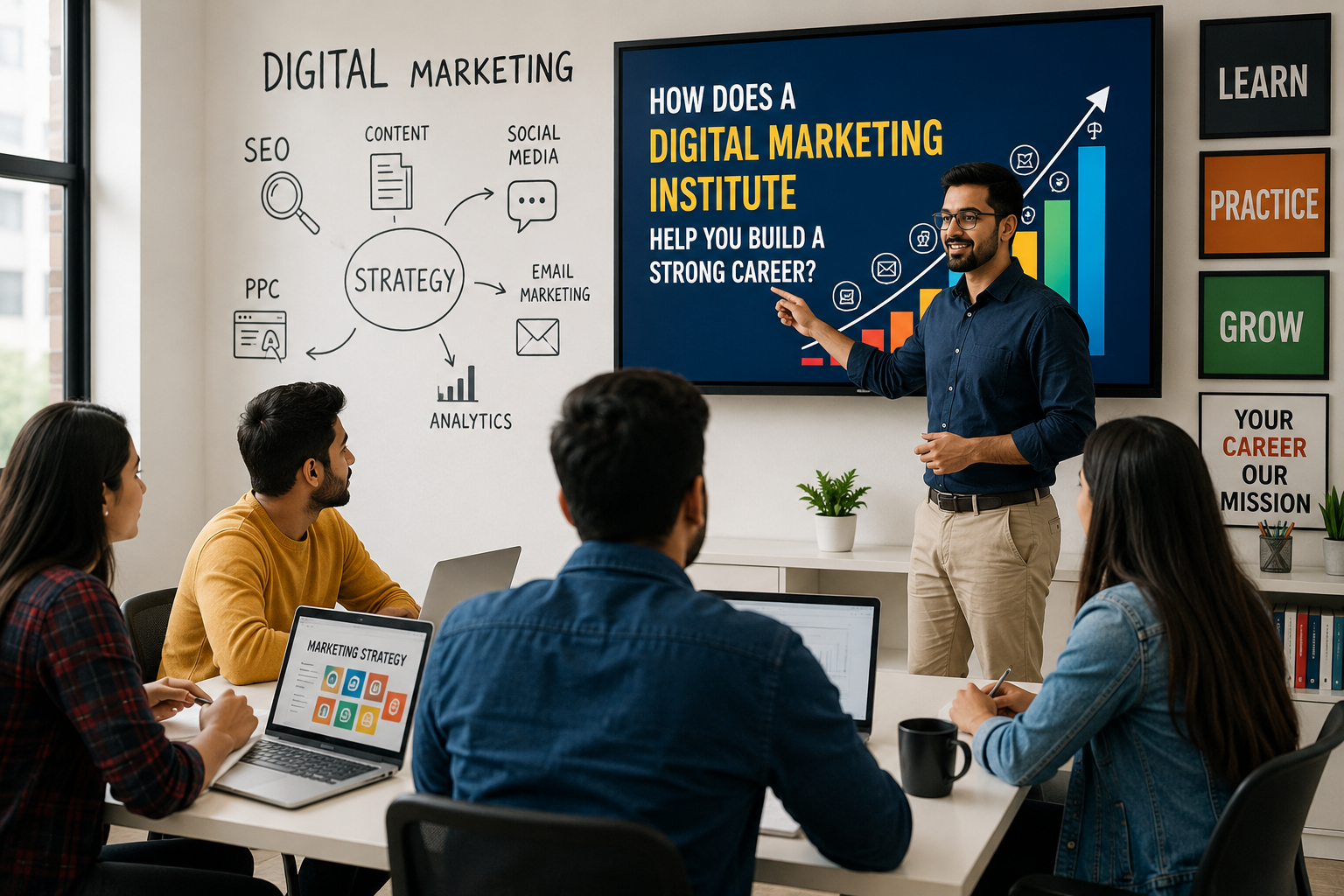
  • What Is the Role of a Digital Marketing Institute in Career Growth?

    What Is the Role of a Digital Marketing Institute in Career Growth?

    The digital marketing industry continues to expand as businesses of all sizes invest in building a stronger online presence. From startups and e-commerce brands to multinational companies, organizations are looking for skilled professionals who can manage digital campaigns, improve website visibility, generate quality leads, and drive business growth. As a result, digital marketing has become one of the most promising career choices for students, graduates, working professionals, entrepreneurs, and freelancers.

    However, succeeding in this competitive field requires more than basic knowledge. Employers seek professionals with practical experience, up-to-date technical skills, and the ability to adapt to rapidly changing marketing trends. This is where a digital marketing institute plays a significant role. A professional training institute equips learners with industry-relevant knowledge, hands-on experience, and career guidance that supports long-term professional growth.

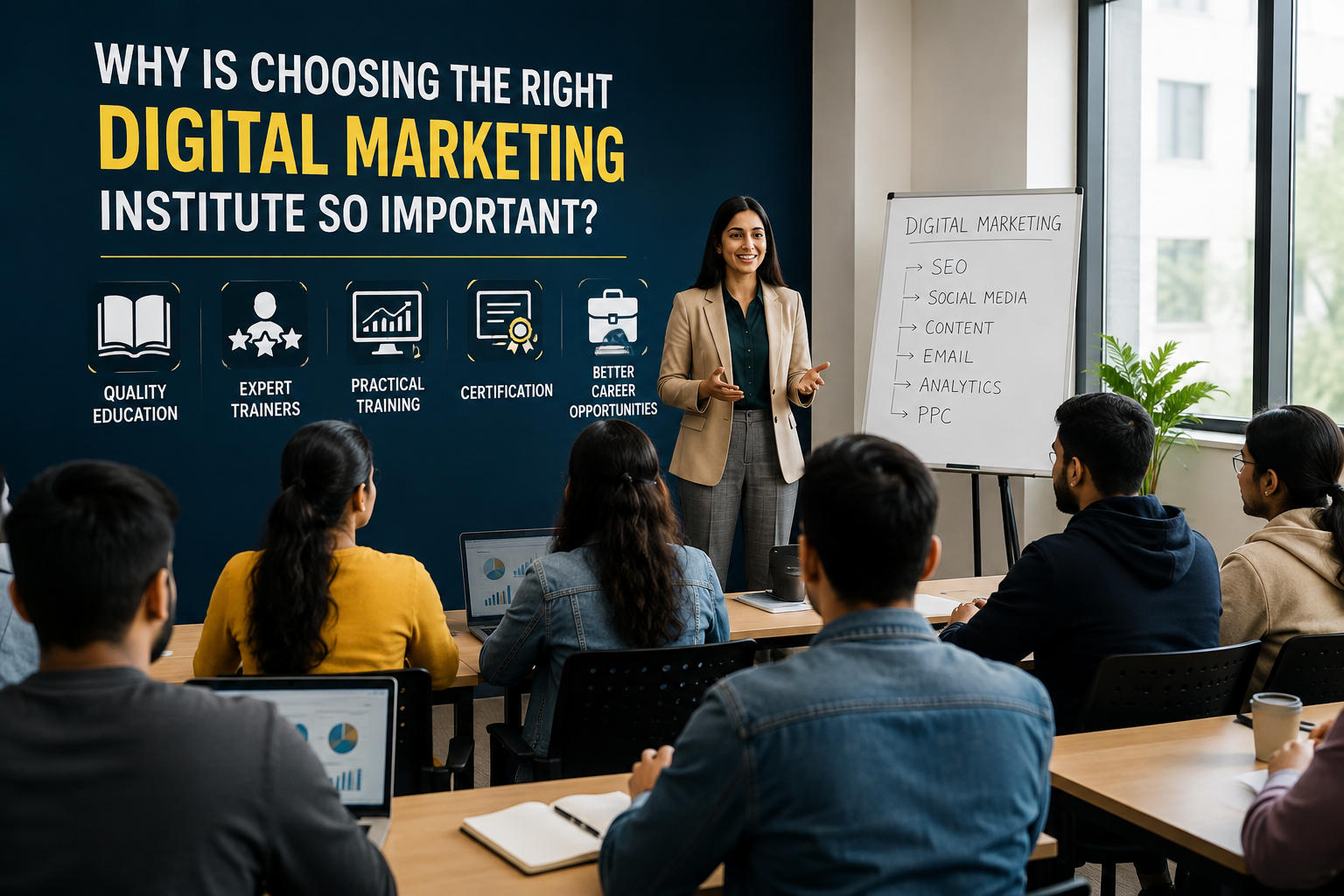
    Why Is a Digital Marketing Institute Important?

    Digital marketing evolves continuously. Search engine algorithms, artificial intelligence, paid advertising platforms, and social media trends change frequently. Learning from outdated resources can leave aspiring marketers behind.

    A quality digital marketing institute provides structured learning that combines theoretical concepts with practical implementation. Students gain exposure to modern marketing tools, live projects, and real-world case studies that prepare them for today’s job market.

    Most comprehensive digital marketing programs include training in:

    • Search Engine Optimization (SEO)
    • Google Ads (PPC)
    • Social Media Marketing
    • Content Marketing
    • Email Marketing
    • Affiliate Marketing
    • Web Analytics
    • Marketing Automation
    • AI-Powered Marketing Tools
    • E-commerce Marketing
    • Conversion Rate Optimization (CRO)

    By learning these skills through practical exercises, students become job-ready and confident in handling real business challenges.

    Gain Hands-On Experience Through Live Projects

    One of the greatest advantages of joining a digital marketing institute is practical learning.

    Instead of only reading about marketing strategies, students actively work on projects that simulate real business scenarios. This practical approach helps learners understand how digital marketing functions in professional environments.

    Students often gain experience by:

    • Conducting keyword research
    • Optimizing websites for search engines
    • Running Google Ads campaigns
    • Creating social media marketing strategies
    • Developing content calendars
    • Writing SEO-friendly website content
    • Tracking campaign performance
    • Using Google Analytics and reporting tools
    • Managing email marketing campaigns
    • Improving website conversions

    Hands-on experience strengthens both technical skills and confidence, making graduates more attractive to employers.

    If you want to build practical digital marketing expertise with an industry-focused curriculum, Explore industry-focused Digital Marketing courses at JDM Institute.

    Learn From Industry Experts

    Experienced trainers bring valuable real-world knowledge into the classroom.

    Unlike self-learning, professional instruction provides insights into industry best practices, client expectations, campaign planning, performance measurement, and emerging digital marketing trends.

    Students also benefit from:

    • Practical demonstrations
    • Interactive learning sessions
    • Industry case studies
    • Campaign analysis
    • Expert mentorship
    • Career guidance

    Learning directly from professionals helps students understand how successful digital marketing strategies are planned and executed.

    Develop In-Demand Skills Employers Value

    Career growth depends on acquiring skills that employers actively seek.

    A digital marketing institute helps learners build expertise across multiple areas.

    Technical Skills

    • SEO
    • Google Ads
    • Website Optimization
    • Keyword Research
    • Analytics Reporting
    • Conversion Optimization

    Creative Skills

    • Content Writing
    • Copywriting
    • Social Media Content
    • Video Marketing
    • Brand Storytelling

    Strategic Skills

    • Campaign Planning
    • Marketing Funnels
    • Audience Targeting
    • Lead Generation
    • Customer Journey Mapping

    Analytical Skills

    • Data Interpretation
    • ROI Measurement
    • Campaign Optimization
    • Marketing Reporting

    These combined skills prepare students for diverse career opportunities across industries.

    Industry Certifications Improve Career Opportunities

    Professional certifications demonstrate that candidates possess practical digital marketing knowledge.

    Many digital marketing institutes prepare students for industry-recognized certifications that strengthen resumes and improve credibility during job interviews.

    Recruiters often prefer candidates who can showcase verified skills alongside practical experience.

    Certifications also demonstrate a commitment to continuous learning, which is highly valued in today’s competitive job market.

    Career Opportunities After Completing Digital Marketing Training

    Digital marketing offers excellent career flexibility.

    Graduates can pursue positions such as:

    • Digital Marketing Executive
    • SEO Specialist
    • PPC Expert
    • Social Media Manager
    • Content Marketing Executive
    • Email Marketing Specialist
    • Performance Marketer
    • Marketing Analyst
    • Web Analytics Specialist
    • E-commerce Marketing Executive
    • Digital Marketing Consultant

    Every industry now requires digital marketing professionals, creating consistent demand across healthcare, education, retail, finance, technology, travel, hospitality, and manufacturing sectors.

    Opportunities Beyond Traditional Employment

    Digital marketing skills also support entrepreneurship and freelancing.

    Many professionals use their training to:

    • Start freelance careers
    • Build digital marketing agencies
    • Offer SEO consulting
    • Launch online businesses
    • Manage e-commerce stores
    • Create personal brands
    • Provide social media management services

    These opportunities allow professionals to work independently while serving clients from around the world.

    The Growing Role of Artificial Intelligence

    Artificial Intelligence is changing how digital marketing campaigns are planned and managed.

    Modern institutes introduce learners to AI-powered tools that improve productivity in areas such as:

    • Content creation
    • Keyword research
    • Customer segmentation
    • Marketing automation
    • Predictive analytics
    • Ad optimization
    • Chatbot marketing
    • Performance reporting

    Professionals who understand both AI tools and traditional marketing strategies gain a significant competitive advantage.

    Build Essential Soft Skills

    Technical expertise alone does not guarantee career success.

    Professional institutes also help students improve important workplace skills, including:

    • Communication
    • Presentation
    • Time Management
    • Leadership
    • Problem Solving
    • Team Collaboration
    • Critical Thinking
    • Client Relationship Management

    These soft skills help professionals grow into leadership positions over time.

    Create a Professional Portfolio

    Employers often evaluate practical work before making hiring decisions.

    A digital marketing institute helps students build portfolios containing:

    • SEO audits
    • Website optimization reports
    • Google Ads campaigns
    • Social media strategies
    • Marketing plans
    • Content writing samples
    • Analytics reports
    • Case studies

    A well-developed portfolio demonstrates practical expertise and increases confidence during interviews.

    Stay Updated With Industry Trends

    Digital marketing never stands still.

    Professional institutes continuously update their curriculum to include:

    • Google’s latest algorithm updates
    • AI-powered marketing tools
    • New social media features
    • Privacy regulations
    • Marketing automation trends
    • Emerging advertising platforms

    Continuous learning ensures professionals remain competitive throughout their careers.

    To stay updated with the latest industry-focused training programs and practical learning opportunities, Visit the JDM Institute homepage to learn more about our Digital Marketing programs.

    Placement Assistance Supports Career Growth

    Many reputed institutes provide placement support that helps students successfully transition into employment.

    Career services often include:

    • Resume preparation
    • LinkedIn profile optimization
    • Mock interviews
    • Career counseling
    • Internship opportunities
    • Employer networking
    • Interview preparation
    • Job referrals

    These services significantly improve students’ confidence and employability.

    Choosing the Right Digital Marketing Institute

    Selecting the right institute is one of the most important decisions for your career.

    Look for an institute that offers:

    • Updated curriculum
    • Experienced trainers
    • Practical projects
    • Industry certifications
    • Flexible learning options
    • Placement assistance
    • Career mentoring
    • Positive student reviews

    A quality learning environment can accelerate both your professional development and long-term career growth.

    Whether your goal is securing your first job, changing careers, growing your business, or becoming a successful freelancer, the right digital marketing institute can provide the knowledge, practical skills, and confidence needed to achieve lasting success.

    If you would like personalized guidance about selecting the right digital marketing course, Contact JDM Institute today to start your Digital Marketing career journey.

    Frequently Asked Questions (FAQs)

    What is the role of a digital marketing institute in career growth?

    A digital marketing institute provides structured education, practical training, industry exposure, certifications, and career support that help students develop job-ready skills and improve their employment opportunities.

    Can beginners join a digital marketing institute?

    Yes. Most digital marketing courses are designed for beginners, students, graduates, working professionals, entrepreneurs, freelancers, and business owners with little or no prior experience.

    What skills can I learn at a digital marketing institute?

    Students typically learn SEO, PPC advertising, social media marketing, content marketing, email marketing, web analytics, AI-powered marketing, conversion optimization, and marketing automation.

    Does a digital marketing institute help with placements?

    Many reputed institutes provide placement assistance, including resume building, interview preparation, internships, career counseling, and job referrals to help students begin their professional careers.

    Is digital marketing a good long-term career?

    Yes. As businesses continue investing in digital channels, demand for skilled digital marketing professionals remains strong across industries, making it a stable and rewarding long-term career choice.

    Why should I choose JDM Institute for digital marketing training?

    JDM Institute offers practical learning, industry-relevant curriculum, experienced mentors, live projects, career guidance, and professional development opportunities that prepare students for success in the digital marketing industry.
  • How Does a Digital Marketing Institute Prepare You for Success?

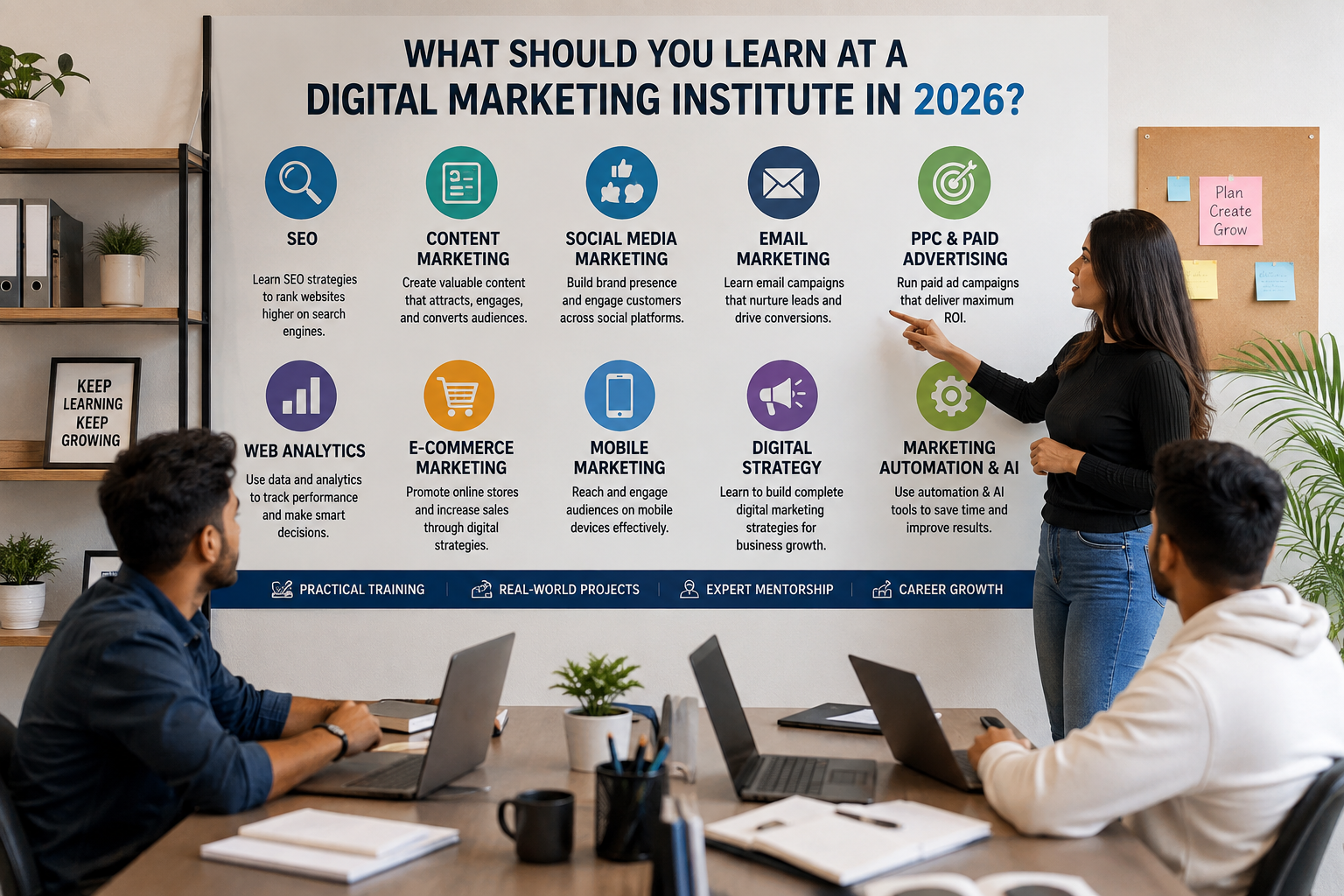
    How Does a Digital Marketing Institute Prepare You for Success?

    The digital economy has transformed how businesses connect with customers, making digital marketing one of the fastest-growing career fields worldwide. Organizations across industries are looking for professionals who can manage online campaigns, improve search engine rankings, generate quality leads, and analyze marketing performance. However, succeeding in this competitive industry requires more than basic knowledge. It demands practical skills, industry exposure, and continuous learning.

    A professional digital marketing institute helps bridge the gap between education and employment by providing structured training, hands-on projects, expert mentorship, and career guidance. Whether you are a student, job seeker, entrepreneur, freelancer, or working professional planning a career switch, enrolling in the right institute can significantly improve your chances of long-term success.

    If you want to gain practical experience through Industry-Focused Digital Marketing Courses at JDM Institute, you’ll benefit from a curriculum designed to meet current industry requirements while preparing you for future marketing trends.

    Why Choose a Digital Marketing Institute?

    Learning digital marketing through random online tutorials can be overwhelming because information is often outdated or incomplete. A professional institute offers a structured learning path that helps students build strong fundamentals before progressing to advanced marketing strategies.

    A comprehensive digital marketing course typically covers:

    • Search Engine Optimization (SEO)
    • Search Engine Marketing (SEM)
    • Google Ads
    • Social Media Marketing
    • Content Marketing
    • Email Marketing
    • Affiliate Marketing
    • Influencer Marketing
    • Website Planning
    • Marketing Analytics
    • AI-Powered Marketing
    • Conversion Rate Optimization (CRO)
    • Lead Generation Strategies
    • Online Reputation Management

    By learning these skills in a structured environment, students gain a complete understanding of how successful digital marketing campaigns are planned, executed, and optimized.

    Practical Learning Makes the Difference

    One of the biggest advantages of joining a digital marketing institute is the opportunity to learn through practical application instead of theory alone.

    Students work on:

    • Live websites
    • SEO audits
    • Google Ads campaigns
    • Meta advertising campaigns
    • Keyword research
    • Website optimization
    • Blog publishing
    • Landing page creation
    • Content strategies
    • Marketing reports
    • Analytics dashboards

    These practical assignments help learners understand how digital marketing works in real business environments. Instead of memorizing concepts, students develop the confidence to implement strategies that produce measurable results.

    Learn from Industry Experts

    Experienced trainers bring valuable insights that cannot be found in textbooks alone. Their real-world experience helps students understand current industry expectations, campaign management techniques, and common marketing challenges.

    Expert mentors guide learners through:

    • Campaign planning
    • Budget allocation
    • Audience targeting
    • Performance analysis
    • Marketing automation
    • AI tools
    • Client communication
    • Problem-solving techniques

    Their guidance helps students avoid common mistakes while developing practical decision-making skills.

    Master the Latest Digital Marketing Tools

    Modern digital marketing relies heavily on professional tools that improve efficiency and campaign performance.

    Students gain hands-on experience with platforms such as:

    • Google Analytics
    • Google Search Console
    • Google Ads
    • Meta Business Suite
    • WordPress
    • Canva
    • Keyword research tools
    • Email marketing platforms
    • AI-assisted content tools
    • Marketing automation software

    Learning these tools before entering the workforce gives students a competitive advantage during job interviews and future projects.

    Stay Updated with Industry Trends

    Digital marketing continues to evolve rapidly. Search engine algorithms change, social media platforms introduce new features, and artificial intelligence is reshaping marketing workflows.

    A quality institute ensures students stay updated with:

    • Google’s latest algorithm updates
    • AI-powered marketing strategies
    • Voice search optimization
    • Local SEO techniques
    • Video marketing trends
    • Performance marketing
    • Marketing automation
    • Consumer behavior analysis
    • Data-driven marketing

    Continuous learning helps graduates remain competitive in an ever-changing digital landscape.

    Build Job-Ready Skills

    Today’s employers value practical skills more than theoretical knowledge.

    Professional training helps students develop the ability to:

    • Increase website traffic
    • Improve search rankings
    • Generate quality leads
    • Optimize paid advertising campaigns
    • Analyze campaign performance
    • Improve website conversions
    • Create engaging content
    • Manage multiple marketing channels

    These capabilities make candidates more attractive to employers across industries.

    Develop a Strong Professional Portfolio

    Employers increasingly prefer candidates who can demonstrate their work rather than simply list certifications.

    During their training, students create portfolios that include:

    • SEO case studies
    • Social media campaigns
    • Blog writing samples
    • Website optimization reports
    • Google Ads projects
    • Analytics reports
    • Keyword research documents
    • Digital marketing strategies

    A professional portfolio showcases practical expertise and helps candidates stand out during interviews.

    At this stage of your learning journey, exploring the Best Digital Marketing Training at JDM Institute can help you strengthen your portfolio through live projects, practical assignments, and expert mentorship that reflects current industry standards.

    Improve Communication and Business Skills

    Digital marketing professionals interact with clients, managers, designers, developers, and customers. Therefore, communication skills are just as important as technical knowledge.

    A professional institute helps students improve:

    • Business communication
    • Presentation skills
    • Strategic thinking
    • Problem-solving
    • Critical analysis
    • Team collaboration
    • Client management

    These soft skills contribute significantly to long-term career growth.

    Certification Enhances Professional Credibility

    Recognized certifications validate your expertise and demonstrate your commitment to continuous learning.

    Professional digital marketing institutes prepare students for industry-recognized certifications while also providing practical training that employers genuinely value.

    Certifications strengthen resumes, improve credibility, and increase confidence during job interviews.

    Career Support Beyond the Classroom

    The best institutes understand that education doesn’t end with course completion.

    Many provide valuable career services such as:

    • Resume building
    • Mock interviews
    • LinkedIn profile optimization
    • Internship opportunities
    • Placement assistance
    • Career counseling
    • Freelancing guidance

    These services help students transition smoothly from learning to employment.

    Explore Multiple Career Opportunities

    Digital marketing offers diverse career paths across nearly every industry.

    Graduates may pursue roles such as:

    • Digital Marketing Executive
    • SEO Specialist
    • PPC Expert
    • Social Media Manager
    • Content Marketing Specialist
    • Performance Marketing Executive
    • Email Marketing Specialist
    • Web Analytics Expert
    • Digital Marketing Consultant
    • Freelancer
    • Entrepreneur

    Because businesses continue expanding their digital presence, skilled marketers remain in high demand across sectors.

    Learn AI-Powered Digital Marketing

    Artificial Intelligence has become an essential part of modern digital marketing.

    Students now learn how AI can assist with:

    • Content generation
    • Keyword research
    • Campaign optimization
    • Customer segmentation
    • Marketing automation
    • Performance analysis
    • Ad copy creation

    Understanding AI alongside traditional marketing techniques prepares students for the future of digital marketing.

    Why the Right Institute Matters

    Choosing the right institute can shape your entire career.

    Look for an institute that offers:

    • Updated curriculum
    • Experienced faculty
    • Practical assignments
    • Live projects
    • Industry certifications
    • Placement support
    • Flexible learning options
    • Personalized mentorship
    • Small batch sizes
    • Career guidance

    A well-rounded learning experience builds both confidence and competence.

    Conclusion

    Success in digital marketing depends on continuous learning, practical experience, and the ability to adapt to changing technologies. A professional digital marketing institute equips students with technical expertise, real-world exposure, and career support that extends beyond the classroom.

    Whether your goal is securing a rewarding job, growing your business, launching a freelance career, or becoming a digital marketing consultant, structured training provides the foundation needed to achieve lasting success.

    If you’re ready to invest in your future, explore Build Your Digital Marketing Career with JDM Institute and discover industry-oriented programs designed to prepare you for today’s competitive digital landscape. For course details, admissions, or personalized career guidance, Contact the JDM Institute Admissions Team and take the first step toward becoming a successful digital marketing professional.

    Frequently Asked Questions (FAQs)

    How does a digital marketing institute prepare students for successful careers?

    A digital marketing institute prepares students through structured learning, live projects, practical assignments, industry tools, certifications, and career support that help develop job-ready skills.

    Why is practical training important in digital marketing?

    Practical training allows students to apply theoretical concepts to real-world scenarios, helping them build confidence and gain experience with live marketing campaigns.

    What skills will I learn in a digital marketing course?

    Most comprehensive digital marketing courses cover SEO, PPC advertising, social media marketing, content marketing, email marketing, Google Analytics, AI marketing tools, website optimization, and lead generation strategies.

    Can a digital marketing institute help me get a job?

    Yes. Reputable institutes often provide portfolio development, resume assistance, interview preparation, internships, and placement support to improve employment opportunities.

    Is digital marketing a good career option in 2026 and beyond?

    Yes. Digital marketing continues to be one of the fastest-growing career fields, offering excellent opportunities in full-time employment, freelancing, consulting, and entrepreneurship as businesses increasingly invest in their online presence.

  • Can a Digital Marketing Institute Improve Your Job Prospects?

    Can a Digital Marketing Institute Improve Your Job Prospects?

    In today’s competitive job market, employers are looking for candidates who possess practical skills, industry knowledge, and the ability to adapt to evolving digital trends. As businesses continue to expand their online presence, the demand for skilled digital marketing professionals has grown significantly across industries. This has made digital marketing one of the most sought-after career paths for students, graduates, working professionals, and entrepreneurs alike.

    However, simply understanding the basics of digital marketing is no longer enough. Companies prefer candidates who can demonstrate hands-on experience with digital marketing tools, campaign management, search engine optimization (SEO), paid advertising, social media marketing, content creation, email marketing, and analytics. This is where a reputable digital marketing institute can make a meaningful difference.

    If you’re wondering whether joining a digital marketing institute can improve your job prospects, the answer is yes—provided you choose an institute that focuses on practical learning, industry-relevant training, and career development.

    Why Are Digital Marketing Skills in High Demand?

    Digital transformation has reshaped the way businesses connect with customers. Whether it’s a startup, an e-commerce company, a healthcare provider, or a multinational corporation, organizations rely on digital marketing to reach their target audience and drive business growth.

    As a result, employers actively seek professionals who understand modern marketing strategies and can deliver measurable results. Some of the most in-demand skills include:

    • Search Engine Optimization (SEO)
    • Search Engine Marketing (SEM)
    • Google Ads
    • Social Media Marketing
    • Content Marketing
    • Email Marketing
    • Web Analytics
    • Marketing Automation
    • AI-powered Marketing Tools
    • Performance Marketing

    The growing demand for these skills has created numerous job opportunities across industries, making digital marketing an attractive career choice for individuals with the right training.

    Can a Digital Marketing Institute Really Improve Your Job Prospects?

    Yes. A quality digital marketing institute provides much more than classroom instruction. It equips students with practical skills that employers value and helps bridge the gap between academic learning and real-world application.

    A structured digital marketing program enables learners to understand every aspect of online marketing through hands-on projects, live campaigns, case studies, and industry-standard tools. Instead of learning only theoretical concepts, students gain practical experience that prepares them for workplace challenges.

    Professional training also helps learners stay updated with changing algorithms, emerging technologies, AI-driven marketing practices, and evolving consumer behavior. This continuous exposure makes candidates more confident during interviews and more productive once they begin working.

    Practical Learning Builds Real-World Confidence

    One of the biggest advantages of enrolling in a professional digital marketing institute is practical learning.

    Students typically work on:

    • Live SEO projects
    • Google Ads campaigns
    • Meta advertising
    • Keyword research
    • Website optimization
    • Social media strategies
    • Content planning
    • Email marketing campaigns
    • Analytics reporting

    Working on real projects helps students understand how digital marketing functions in actual business environments. It also enables them to develop a professional portfolio that showcases their skills to potential employers.

    As you build these practical competencies, it’s equally important to learn from an institution that stays current with industry trends. Explore industry-focused digital marketing courses at JDM Institute to gain hands-on experience, expert mentorship, and career-focused training designed to help you become job-ready.

    Skills Employers Look for in Digital Marketing Professionals

    Today’s employers expect candidates to possess a balanced combination of technical expertise and professional skills.

    Important technical skills include:

    • SEO optimization
    • Google Ads management
    • Meta Ads
    • Content marketing
    • Social media management
    • Google Analytics
    • AI marketing tools
    • Marketing automation
    • Conversion optimization
    • Performance reporting

    Alongside technical knowledge, employers also value soft skills such as:

    • Communication
    • Creativity
    • Problem-solving
    • Strategic thinking
    • Analytical ability
    • Team collaboration
    • Time management
    • Adaptability

    A structured training program helps students develop both technical and interpersonal skills, making them more competitive in the job market.

    How Industry-Oriented Training Enhances Employability

    Employers prefer candidates who can contribute from day one. Industry-oriented training prepares learners to handle real business challenges rather than relying solely on textbook knowledge.

    Modern digital marketing institutes often include:

    • Industry case studies
    • Practical assignments
    • Live campaign management
    • Internship opportunities
    • Resume preparation
    • Interview training
    • Portfolio development
    • Career counseling

    These experiences help students build confidence while demonstrating practical expertise during recruitment.

    Career Opportunities After Digital Marketing Training

    Completing a professional digital marketing course opens the door to a wide range of career opportunities.

    Popular job roles include:

    • Digital Marketing Executive
    • SEO Executive
    • PPC Specialist
    • Social Media Manager
    • Performance Marketing Executive
    • Content Marketing Specialist
    • Email Marketing Executive
    • Marketing Automation Specialist
    • Digital Marketing Analyst
    • E-commerce Marketing Executive
    • Freelance Digital Marketer
    • Digital Marketing Consultant

    Many professionals also choose entrepreneurship or freelance consulting, allowing them to work with clients across different industries.

    Why Choosing the Right Institute Matters

    Not every digital marketing institute offers the same quality of education. Before enrolling, consider factors such as:

    • Updated curriculum
    • Experienced trainers
    • Practical learning approach
    • Live projects
    • Industry certifications
    • Placement assistance
    • Internship support
    • Small batch sizes
    • Career guidance
    • Alumni success stories

    Choosing an institute that focuses on practical application rather than theory alone can significantly improve your career prospects and help you stay competitive in a rapidly evolving digital landscape.

    Prepare Yourself for a Successful Digital Marketing Career

    Digital marketing is one of the fastest-growing industries, offering exciting career opportunities across businesses of all sizes. However, success in this field requires more than basic knowledge—it demands practical experience, continuous learning, and the ability to apply marketing strategies effectively.

    Joining a reputable digital marketing institute can provide the structured learning, hands-on training, industry exposure, and career support needed to build confidence and improve employability. Whether you’re starting your career, looking to switch industries, or planning to enhance your existing skills, professional training can help you achieve your goals.

    If you’re ready to take the next step toward a rewarding career in digital marketing, Contact us today to enroll in our job-oriented digital marketing training program and discover how expert guidance and practical learning can help you unlock new career opportunities.

    Frequently Asked Questions (FAQs)

    Can a digital marketing institute really help me get a job?

    Yes. A quality digital marketing institute provides practical training, live projects, industry exposure, certifications, and career support that improve your employability and prepare you for digital marketing roles.

    What skills do employers expect from digital marketing professionals?

    Employers typically look for skills such as SEO, Google Ads, social media marketing, content marketing, analytics, email marketing, AI marketing tools, communication, problem-solving, and campaign management.

    Is digital marketing a good career choice?

    Yes. Digital marketing offers strong career growth, competitive salaries, remote work opportunities, freelance options, and increasing demand across industries.

    How important is practical training in digital marketing?

    Practical training allows learners to apply theoretical concepts through live projects and real-world campaigns, making them more confident and job-ready.

    Can beginners learn digital marketing successfully?

    Absolutely. Most professional digital marketing courses are designed for beginners and gradually build knowledge from foundational concepts to advanced strategies.

    What career opportunities are available after completing a digital marketing course?

    Graduates can pursue roles such as SEO Executive, PPC Specialist, Social Media Manager, Content Marketer, Performance Marketer, Digital Marketing Executive, Marketing Analyst, Freelancer, or Digital Marketing Consultant.

    How long does it take to become job-ready in digital marketing?

    Depending on the course structure and learning pace, many students become job-ready within a few months through a combination of classroom learning, practical assignments, and live projects.

    Why should I choose JDM Institute for digital marketing training?

    A career-focused institute that offers an updated curriculum, experienced trainers, practical projects, industry-relevant tools, and placement support can help learners build the confidence and skills needed for long-term success in digital marketing.

  • How can marketers balance creativity with data analytics?

    How can marketers balance creativity with data analytics?

    Modern marketing success depends on more than great ideas or strong analytical skills alone. The most effective marketers know how to combine creativity with data analytics to develop campaigns that capture attention, engage audiences, and deliver measurable results. Creativity helps brands stand out in crowded markets, while data provides the insights needed to understand customer behavior, optimize performance, and make informed decisions. When these two elements work together, marketers can achieve stronger outcomes and create meaningful customer experiences.

    Use Data to Inspire Creative Ideas

    Data analytics should be viewed as a source of inspiration rather than a limitation on creativity. Marketers can use audience insights, website analytics, customer feedback, and social media metrics to understand what consumers are interested in and how they interact with content.

    For example, if data reveals that a particular audience segment frequently engages with video content, marketers can focus on creating compelling video campaigns tailored to those preferences. Similarly, trend analysis can uncover emerging topics that inspire fresh content ideas. By grounding creative concepts in real audience insights, marketers can increase the likelihood that their campaigns will resonate with their target market.

    Professionals who want to strengthen their understanding of both marketing strategy and analytics often seek guidance from a leading digital marketing and professional training institute that provides practical exposure to modern marketing techniques.

    Establish Clear Goals Before Creating Campaigns

    Creativity is most effective when it supports a defined objective. Before launching a campaign, marketers should identify clear goals such as increasing website traffic, generating leads, boosting conversions, improving customer engagement, or building brand awareness.

    Once goals are established, data analytics can help determine which metrics should be tracked. Creative teams can then develop content and campaigns designed to achieve those objectives. This alignment ensures that creative efforts contribute directly to business outcomes rather than existing solely for aesthetic appeal.

    Clear objectives also make it easier to evaluate campaign performance and identify opportunities for future improvements.

    Understand Your Audience Through Analytics

    One of the greatest advantages of data analytics is its ability to reveal valuable insights about customer behavior. Analytics tools can show how visitors navigate a website, which content attracts the most engagement, and where potential customers drop off during the buying journey.

    These insights allow marketers to create more relevant and personalized experiences. For example, if analytics indicate that customers frequently search for educational content before making a purchase decision, marketers can develop informative blogs, videos, guides, and webinars that address those needs.

    The combination of audience understanding and creative storytelling helps brands connect with consumers in ways that feel authentic and valuable.

    Encourage Collaboration Between Creative and Data Teams

    Balancing creativity and analytics requires close collaboration between different departments. In many organizations, creative teams focus on content development while analytics teams concentrate on performance measurement. When these groups operate independently, valuable opportunities can be missed.

    A collaborative approach allows data specialists to share audience insights, performance trends, and customer behavior patterns with creative professionals. Creative teams can then transform those insights into engaging campaigns that align with audience interests.

    Regular communication helps ensure that creativity remains informed by data while analytics continue to support innovative marketing efforts. The result is a more strategic and effective marketing process.

    Test Creative Concepts and Measure Results

    Even the strongest creative ideas should be validated through testing. Data analytics enables marketers to evaluate campaign performance and determine which elements are generating the best results.

    A/B testing is particularly useful for comparing different headlines, email subject lines, calls to action, landing page designs, or advertising creatives. By analyzing performance data, marketers can identify what resonates most with their audience and make adjustments accordingly.

    Testing creates a healthy balance between creative experimentation and evidence-based decision-making. It encourages innovation while reducing the risk of investing heavily in ideas that may not perform as expected.

    Maintain Authenticity and Brand Identity

    While data provides valuable guidance, marketers should avoid relying exclusively on metrics. Consumers connect with brands because of their personality, values, and unique stories—not just because content performs well in analytics reports.

    Creativity plays a vital role in building emotional connections and establishing a distinctive brand voice. Data can reveal what audiences want, but creative storytelling is what makes content memorable.

    The most successful brands use analytics to understand customer needs while preserving the authenticity that differentiates them from competitors. This balance helps create trust, loyalty, and long-term customer relationships.

    Leverage Technology to Support Creativity

    Modern marketing technologies, including artificial intelligence, automation platforms, and predictive analytics tools, have transformed the way marketers gather and interpret data. These technologies can identify trends, automate repetitive tasks, and provide valuable recommendations.

    However, technology should enhance creativity rather than replace it. Human insight remains essential for developing compelling narratives, innovative campaigns, and emotionally engaging experiences. Marketers who use technology strategically can free up more time for creative thinking while benefiting from data-driven decision-making.

    Many professionals enhance these skills through advanced digital marketing courses and industry-focused training programs that combine creative marketing principles with analytical expertise.

    Build a Culture of Continuous Learning

    The marketing industry evolves rapidly, making continuous learning essential for long-term success. New platforms, consumer behaviors, technologies, and analytical tools emerge regularly, creating opportunities for marketers to refine their skills.

    Organizations should encourage team members to stay informed about industry developments, experiment with new approaches, and analyze campaign performance consistently. A culture of learning helps marketers remain adaptable and better equipped to balance creative innovation with analytical precision.

    Investing in education and professional development enables individuals to strengthen both sides of the marketing equation and stay competitive in a dynamic marketplace.

    Conclusion

    Balancing creativity with data analytics is one of the most important skills modern marketers can develop. Creativity helps brands capture attention, tell compelling stories, and build emotional connections, while data analytics provides the insights needed to understand audiences and improve performance.

    By using data to inform creative decisions, setting clear objectives, collaborating across teams, testing ideas, maintaining authenticity, and embracing continuous learning, marketers can create campaigns that are both imaginative and results-driven. Businesses and aspiring marketing professionals looking for additional guidance can contact the digital marketing education experts for course guidance to explore opportunities for professional growth and industry-relevant training.

  • How can businesses prevent ad fatigue among online audiences?

    How can businesses prevent ad fatigue among online audiences?

    Ad fatigue is a growing issue in digital marketing, particularly as audiences are exposed to increasing volumes of paid content across social media platforms, search engines, and programmatic display networks. It occurs when users repeatedly see the same or very similar advertisements, causing disengagement, lower click-through rates, reduced conversions, and in some cases, negative brand perception. Preventing ad fatigue is not just about changing visuals occasionally—it requires a structured, data-informed approach to audience targeting, creative strategy, and campaign optimization.

    As digital ecosystems become more competitive, marketers need to focus on sustainability rather than short bursts of performance. Institutions like the JDM Institute digital marketing training programs help professionals understand how to balance creative strategy with analytics-driven decision-making, which is essential for managing audience saturation effectively.

    Rotate and Refresh Ad Creatives Regularly

    One of the most effective ways to prevent ad fatigue is to continuously refresh ad creatives. When audiences are repeatedly exposed to identical visuals, taglines, or calls-to-action, performance naturally declines over time. This happens because familiarity reduces attention, making even high-quality ads less effective.

    Businesses should develop a structured creative rotation system. Instead of relying on a single ad variation, campaigns should include multiple versions with different headlines, imagery, color palettes, formats, and messaging angles. Even small changes—such as updating the opening line of copy or switching the image focus—can significantly improve engagement.

    Seasonal updates, trend-based messaging, and culturally relevant references can also help keep content fresh. This ensures that users perceive the brand as dynamic rather than repetitive, which is key to maintaining long-term engagement.

    Use Audience Segmentation and Frequency Control

    Audience segmentation is essential for reducing unnecessary repetition. Rather than targeting all users with the same message, businesses should divide their audience into smaller groups based on behavior, interests, demographics, or stage in the buying journey. This allows for more precise messaging that feels relevant rather than repetitive.

    Equally important is frequency capping. This technique limits the number of times a specific user sees the same ad within a defined time period. Without frequency control, even well-designed campaigns can quickly lead to oversaturation.

    Professionals trained through platforms like the JDM Institute learn how to implement segmentation and frequency management using advanced advertising tools, ensuring campaigns remain efficient and audience-centric while minimizing the risk of fatigue.

    Leverage Data-Driven Optimization and A/B Testing

    Data analysis is central to identifying and preventing ad fatigue. Key performance indicators such as impressions, click-through rates, conversion rates, and engagement trends should be monitored closely. A gradual decline in these metrics often signals that audiences are becoming overexposed to the same messaging.

    A/B testing is a powerful method for maintaining freshness in campaigns. By testing different variations of ad copy, visuals, and calls-to-action, marketers can determine which combinations perform best over time. This iterative process ensures continuous improvement rather than static execution.

    For example, if one ad variation begins to show declining engagement after repeated exposure, marketers can quickly shift budget allocation toward higher-performing alternatives. This data-driven adaptability is essential in maintaining long-term campaign effectiveness.

    Diversify Across Multiple Advertising Channels

    Relying on a single advertising platform increases the likelihood of ad fatigue. When users encounter the same message repeatedly in one environment, they are more likely to ignore it or develop banner blindness. Diversifying across multiple channels helps distribute exposure more evenly and reduces repetition.

    Businesses should consider a mix of social media advertising, search engine marketing, email campaigns, influencer collaborations, and display networks. Each channel offers unique engagement patterns, allowing marketers to tailor messaging accordingly.

    For instance, short-form visual content may perform best on social platforms, while more detailed or educational messaging may be better suited for email or blog-based campaigns. This variation helps maintain audience interest while reinforcing brand messaging in different formats.

    Personalize Without Overexposing

    Personalization improves relevance, but excessive repetition of personalized ads can still lead to fatigue. The goal is to balance tailored messaging with controlled exposure. Users should feel that content is relevant, not overwhelming.

    Dynamic creative optimization (DCO) enables advertisers to automatically adjust ad elements based on user data, such as browsing behavior or past interactions. This ensures that each user sees content aligned with their interests.

    However, even personalized campaigns require rotation. Limiting repetition and varying creative elements ensures that personalization remains effective without becoming intrusive or repetitive.

    Monitor Engagement and Establish Feedback Loops

    Ongoing monitoring is essential for identifying early signs of ad fatigue. Metrics such as declining engagement rates, rising cost-per-click, or reduced return on ad spend can indicate that audiences are becoming oversaturated with messaging.

    In addition to quantitative data, qualitative feedback can provide valuable insights. Customer surveys, social media comments, and direct interactions often reveal how audiences perceive ad frequency and relevance.

    Businesses aiming to strengthen their marketing systems and reduce inefficiencies like ad fatigue can benefit from structured learning and strategy development offered by JDM Institute digital marketing education at, which emphasizes practical application alongside analytics-driven decision-making.

    Conclusion

    Preventing ad fatigue requires a proactive and multi-layered strategy. Businesses must consistently refresh creatives, segment audiences effectively, control ad frequency, leverage data insights, diversify channels, and apply personalization carefully. When these elements work together, campaigns remain engaging, relevant, and cost-effective over time.

    For organizations seeking additional guidance or support in building optimized digital marketing strategies, they can reach out through the Contact Us page at JDM Institute to explore structured solutions for improving campaign performance and reducing audience fatigue.

  • How Can Brands Stand Out in Content-Saturated Platforms?

    How Can Brands Stand Out in Content-Saturated Platforms?

    Standing out in today’s crowded digital landscape starts with a deep understanding of your audience. Many brands focus only on age, location, or job title, but successful content strategies go much further. Understanding your audience’s challenges, goals, interests, and online behavior helps create content that feels relevant and valuable.

    Brands should regularly analyze customer feedback, survey responses, social media interactions, and website analytics to identify what matters most to their target audience. When content addresses real questions and concerns, it naturally attracts more engagement and encourages audiences to return for future insights.

    Create a Distinctive Brand Voice

    A unique brand voice is one of the most effective ways to differentiate content from competitors. While many businesses may cover similar topics, the way they communicate can make a lasting impression. A consistent voice helps audiences recognize and remember a brand across multiple platforms.

    Whether the tone is professional, educational, conversational, or inspirational, maintaining consistency strengthens brand identity. Over time, audiences begin to associate certain communication styles, perspectives, and values with a specific brand, creating stronger recognition and trust.

    Focus on Delivering Genuine Value

    Consumers are exposed to an overwhelming amount of content every day. As a result, they quickly ignore material that feels repetitive, promotional, or unhelpful. Brands that consistently provide useful information are more likely to earn attention and loyalty.

    Educational content, practical guides, industry insights, case studies, and expert recommendations can help audiences solve problems and make informed decisions. By prioritizing value over direct promotion, businesses can position themselves as trusted resources within their industries.

    Use Storytelling to Build Stronger Connections

    Storytelling transforms ordinary content into memorable experiences. While data and facts are important, stories create emotional connections that audiences often remember long after reading an article or watching a video.

    Brands can share customer success stories, company milestones, employee experiences, or lessons learned from real-world situations. These narratives humanize the brand and make content more relatable. Effective storytelling helps audiences see the people behind the business, strengthening trust and engagement.

    Invest in High-Quality Content Presentation

    Even exceptional content can underperform if it is difficult to consume. Modern audiences prefer content that is visually appealing, easy to scan, and well organized. Clear headings, short paragraphs, bullet points, and engaging visuals can significantly improve readability.

    Videos, infographics, illustrations, and interactive elements can also increase audience engagement. High-quality presentation not only improves user experience but also reinforces professionalism and credibility. Brands that invest in both content quality and design often achieve stronger results across digital platforms.

    Build Authority Through Expertise

    In content-saturated environments, expertise helps brands rise above the competition. Audiences are more likely to engage with organizations that demonstrate deep industry knowledge and provide trustworthy information.

    Publishing thought leadership articles, research findings, expert commentary, and educational resources can establish credibility. Organizations focused on professional development and industry education, such as JDM Institute for industry-focused education and professional skill development, recognize the importance of creating informative content that supports learning and skill development while building long-term authority.

    Maintain Consistency Across Platforms

    Consistency plays a critical role in building visibility and trust. Many brands struggle because they publish content irregularly or frequently change their messaging. Consistent content creation helps audiences know what to expect and reinforces brand recognition.

    This consistency should extend beyond publishing schedules. Visual branding, tone of voice, messaging, and content quality should remain aligned across websites, social media channels, email campaigns, and other digital platforms. A unified experience strengthens audience confidence and makes the brand more memorable.

    Personalize Content for Different Audience Segments

    Generic content often gets lost in crowded feeds because it lacks relevance. Personalization allows brands to create more meaningful connections by addressing the specific needs of different audience groups.

    Businesses can segment audiences based on interests, industries, buying stages, or professional goals. Tailored content feels more relevant and can improve engagement, conversions, and customer satisfaction. As audiences increasingly expect personalized experiences, brands that deliver targeted content gain a significant competitive advantage.

    Encourage Two-Way Engagement

    Successful content marketing is not simply about publishing information. It is also about building conversations. Brands that actively engage with their audiences often create stronger relationships and more loyal communities.

    Responding to comments, answering questions, participating in discussions, and encouraging user feedback demonstrates that a brand values its audience. These interactions foster trust and create opportunities for deeper engagement. Additionally, active participation can increase visibility on platforms that prioritize community interaction.

    Optimize Content for Search Visibility

    Search engine optimization remains essential for helping content reach the right audience. However, modern SEO focuses on more than keyword placement. Search engines increasingly reward content that provides comprehensive answers, demonstrates expertise, and delivers a positive user experience.

    Brands should optimize headings, metadata, internal links, and content structure while maintaining natural readability. Creating content that aligns with user intent helps improve rankings and ensures visitors find the information they are seeking. Educational institutions and training providers, including JDM Institute career-oriented learning and training programs, often benefit from publishing authoritative resources that address common industry questions and learning objectives.

    Repurpose and Distribute Content Strategically

    Creating great content is only part of the process. Effective distribution ensures that content reaches the intended audience. Brands should maximize the value of each piece by repurposing it into multiple formats.

    A blog article can become a video, infographic, podcast discussion, social media series, or email newsletter. This approach extends content lifespan while reaching audiences across different channels. Strategic distribution helps brands maintain visibility without constantly creating entirely new content from scratch.

    Build Trust Through Authenticity

    Authenticity has become increasingly important as consumers grow more selective about the brands they support. Audiences appreciate transparency, honesty, and realistic messaging. Brands that communicate openly about their values, experiences, and expertise often build stronger connections than those relying on overly promotional content.

    Trust develops through consistent actions, accurate information, and meaningful interactions. When audiences view a brand as reliable and credible, they are more likely to engage with its content, recommend it to others, and become long-term customers.

    Conclusion

    Standing out in content-saturated platforms requires a strategic combination of audience understanding, valuable insights, authentic storytelling, and consistent execution. Brands that focus on solving problems, sharing expertise, and building meaningful relationships can rise above the noise and create lasting impact.

    Success is not determined by the volume of content produced but by the relevance and quality of the experience delivered to the audience. Businesses that continuously refine their approach and prioritize audience value are better positioned to achieve sustainable growth and long-term visibility. For additional information or personalized assistance, visit the contact the JDM Institute team for guidance and support page.

  • How AI-Generated Content Is Reshaping Marketing Careers Today

    How AI-Generated Content Is Reshaping Marketing Careers Today

    Artificial intelligence (AI)-generated content is rapidly transforming the marketing industry, reshaping how professionals create, distribute, and optimize digital campaigns. What was once a field heavily reliant on manual content writing, creative brainstorming, and time-intensive research is now being augmented by AI tools capable of producing blogs, ad copy, email sequences, and social media posts within seconds. This shift is not simply about automation—it is redefining job roles, required skill sets, and long-term career paths in marketing. As businesses adopt AI at scale, marketers are being challenged to adapt quickly or risk falling behind in an increasingly competitive landscape.

    For professionals looking to stay relevant, understanding this transformation is essential. Institutions such as digital marketing training at JDM Institute are helping learners and working marketers develop future-ready digital skills that align with AI-driven marketing environments. The key is not to compete with AI, but to learn how to collaborate with it effectively to improve productivity, creativity, and campaign performance.

    The Shift from Manual Creation to AI-Augmented Marketing

    One of the most significant impacts of AI-generated content is the shift from manual production to AI-assisted workflows. Tasks that once required hours of writing and editing can now be completed in minutes using tools like generative text models and content automation platforms. This has dramatically increased content output across industries, especially in digital marketing agencies and in-house brand teams.

    However, this does not mean marketing roles are disappearing. Instead, the nature of the work is changing. Marketers are increasingly acting as editors, strategists, and curators rather than pure content creators. They guide AI tools, refine outputs, and ensure messaging aligns with brand voice and audience expectations. As a result, critical thinking and strategic oversight are becoming more valuable than raw content production alone.

    Educational pathways such as professional AI-powered marketing courses at JDM Institute emphasize these evolving competencies, helping learners understand how to integrate AI tools into broader marketing strategies rather than relying on them blindly.

    New Skill Sets Emerging in Marketing Careers

    As AI becomes more embedded in marketing workflows, new skill sets are emerging as essential for career growth. Data literacy, prompt engineering, content optimization, and AI tool management are now highly sought after in job descriptions. Marketers are expected to understand not only how to create compelling messaging but also how to instruct AI systems to generate effective outputs.

    Additionally, analytical skills are gaining importance. AI can produce large volumes of content, but human marketers are needed to interpret performance data, identify trends, and make informed decisions. This combination of creative direction and data-driven strategy is defining the modern marketing professional.

    For those entering the industry or reskilling, programs like digital marketing training at JDM Institute provide structured learning paths that bridge traditional marketing knowledge with emerging AI capabilities, ensuring professionals remain competitive in a rapidly evolving job market.

    Job Roles Are Evolving, Not Disappearing

    A common concern surrounding AI-generated content is job displacement. While some entry-level tasks such as basic copywriting or repetitive content creation are being automated, entirely new roles are also emerging. Positions like AI content strategist, marketing automation specialist, and growth marketing analyst are becoming more common.

    These roles require a hybrid understanding of marketing principles and AI tools. Instead of focusing solely on writing or design, professionals are now responsible for orchestrating entire content ecosystems powered by automation. This includes managing AI outputs, maintaining quality control, and ensuring ethical and brand-consistent communication.

    Marketers who adapt to these changes are often able to increase their productivity and expand their career opportunities. For those unsure about how to transition into these roles, reaching out through the contact JDM Institute for course guidance page can be a practical first step toward receiving support on training and upskilling options.

    Opportunities and Challenges in an AI-Driven Landscape

    AI-generated content brings both opportunities and challenges. On the positive side, it allows marketing teams to scale content production, personalize messaging at a deeper level, and reduce operational costs. Small businesses, in particular, benefit from having access to tools that previously required large teams or agencies.

    On the other hand, challenges such as content saturation, loss of originality, and over-reliance on automation are becoming increasingly evident. When many businesses use similar AI tools, there is a risk of producing generic content that fails to stand out. This places greater emphasis on human creativity, storytelling, and brand differentiation.

    To navigate these challenges effectively, marketers must learn how to balance automation with authenticity. Training platforms like advanced digital marketing training at JDM Institute help professionals develop this balance by teaching both technical AI usage and creative marketing strategy.

    The Future of Marketing Careers in the Age of AI

    Looking ahead, marketing careers will likely become more interdisciplinary, blending creativity, technology, and analytics. Rather than replacing marketers, AI is expected to act as an amplifier of human capability. Those who understand how to leverage AI tools effectively will be able to execute campaigns faster, test ideas more efficiently, and achieve better results with fewer resources.

    Continuous learning will be essential in this environment. As AI tools evolve, marketers must stay updated with new platforms, techniques, and ethical considerations. Educational support and structured training will play a crucial role in career sustainability, making institutions like JDM Institute increasingly relevant for long-term professional development.

    In conclusion, AI-generated content is not eliminating marketing careers—it is redefining them. The professionals who thrive will be those who embrace change, develop hybrid skill sets, and focus on strategic creativity rather than repetitive execution. For those ready to take the next step, exploring resources through JDM Institute or reaching out via the contact JDM Institute for course guidance page can provide a strong foundation for navigating this new era of marketing.

  • How Can Data Analytics Improve Digital Marketing Performance Effectively?

    How Can Data Analytics Improve Digital Marketing Performance Effectively?

    Data analytics has become a core driver of success in digital marketing. Instead of relying on assumptions, businesses now use measurable insights to guide every decision. From understanding customer behavior to refining advertising strategies, analytics helps marketers improve accuracy, efficiency, and overall performance. It transforms raw numbers into meaningful patterns that support smarter marketing strategies and stronger business outcomes.

    Understanding Audience Behavior and Preferences

    One of the most powerful benefits of data analytics is the ability to understand audiences on a deeper level. By analyzing user interactions, demographics, browsing patterns, and purchase history, businesses can build detailed customer profiles. These insights allow marketers to segment audiences more effectively and deliver personalized messaging.

    Personalization plays a key role in improving engagement. When users receive content that matches their interests and needs, they are more likely to interact, convert, and remain loyal to a brand. Data-driven audience insights ensure that marketing efforts are not generic but highly targeted and relevant.

    Campaign Optimization for Better Performance

    Digital marketing campaigns generate large volumes of data across platforms such as search engines, social media, and email marketing tools. Data analytics helps interpret this information to identify what is working and what needs improvement.

    Marketers can track key performance indicators like click-through rates, conversion rates, and cost per acquisition. Based on this data, they can adjust targeting, refine ad creatives, and allocate budgets more efficiently. This continuous optimization ensures that marketing campaigns deliver maximum ROI while minimizing unnecessary spending.

    Improving SEO and Content Strategy

    Search engine optimization heavily depends on data analytics. By evaluating keyword performance, traffic sources, bounce rates, and user engagement metrics, marketers can optimize content for better visibility.

    Analytics helps identify which topics attract the most organic traffic and which pages need improvement. It also reveals user intent, allowing businesses to create content that aligns with what their audience is actively searching for. Over time, this leads to improved search rankings, higher website traffic, and better content performance.

    Learn Practical Digital Marketing Skills with Industry Experts

    To truly apply data analytics in real marketing scenarios, structured training is essential. Many learners build their foundation through industry-focused programs that combine theory with hands-on practice.

    A strong example is JDM Institute, which offers professional training in digital marketing, analytics tools, and performance tracking systems. You can explore their full range of programs directly on their official website: advanced digital marketing training and analytics courses at JDM Institute.

    These programs help learners understand how real-world marketing campaigns are analyzed and optimized using data-driven techniques. This practical exposure is especially valuable for building job-ready skills in today’s competitive digital landscape.

    Enhancing Customer Journey Mapping

    Understanding the customer journey is essential for improving conversions. Data analytics allows businesses to track how users move from awareness to consideration and finally to purchase.

    By identifying where users drop off in the funnel, marketers can optimize each stage of the journey. For example, they may improve landing pages, simplify navigation, or enhance call-to-action strategies. A smoother customer journey results in higher engagement and increased conversion rates.

    Predictive Analytics for Smarter Decision-Making

    Predictive analytics takes digital marketing a step further by forecasting future trends based on historical data. It helps businesses anticipate customer behavior, seasonal demand, and market shifts.

    This proactive approach allows marketers to stay ahead of competitors and make informed strategic decisions. Instead of reacting to changes, businesses can prepare for them in advance, ensuring better campaign planning and resource allocation.

    Measuring ROI and Business Impact

    One of the most important aspects of data analytics is its ability to measure return on investment accurately. Businesses can track exactly how much revenue is generated from specific campaigns, keywords, or audience segments.

    This transparency allows marketers to identify high-performing strategies and eliminate ineffective ones. As a result, marketing budgets are used more efficiently, and overall profitability improves significantly.

    Advanced Learning and Career Growth Opportunities

    As digital marketing continues to evolve, professionals must stay updated with the latest tools and techniques. Advanced training helps bridge the gap between theoretical knowledge and practical implementation.

    JDM Institute also focuses on preparing learners for real industry challenges through project-based learning and case studies. Their structured approach ensures that students can confidently apply analytics concepts in live campaigns, improving both performance and career readiness.

    Direct Support and Guidance

    For learners who need assistance with enrollment, course details, or career guidance, support is easily accessible. You can reach out through the official contact page for personalized help: contact JDM Institute for digital marketing course inquiries and admissions support.

    Conclusion

    Data analytics is no longer optional in digital marketing—it is essential. It empowers businesses to understand their audience, optimize campaigns, improve SEO, and maximize ROI. With predictive insights and real-time reporting, marketers can make faster and more accurate decisions.

    By integrating analytics into every stage of marketing, businesses can achieve sustained growth and stronger digital performance. Those who adopt data-driven strategies consistently outperform competitors who rely on intuition alone.

  • How Can Businesses Create Strong and Loyal Online Communities Today?

    How Can Businesses Create Strong and Loyal Online Communities Today?

    Online communities have become a core part of modern business growth. Customers are no longer passive buyers; they actively participate in conversations, share experiences, and expect meaningful engagement from brands. A strong online community helps businesses build trust, improve customer retention, and strengthen long-term brand loyalty.

    When customers feel connected to a brand, they are more likely to engage repeatedly, recommend it to others, and remain loyal even in competitive markets. This makes community-building a strategic advantage rather than just a marketing activity.

    Creating Authentic and Meaningful Engagement

    Authenticity is the foundation of every successful online community. Customers can quickly identify when communication feels overly promotional or artificial. Businesses must focus on genuine, human-centered communication that reflects real values and intentions.

    Engagement should be conversational rather than transactional. Responding to comments, acknowledging feedback, and participating in discussions helps build emotional connections with the audience. When customers feel heard, they are more likely to stay active within the community and trust the brand.

    Consistency also plays a key role. Regular interaction across platforms ensures that the community remains active, relevant, and connected to the brand’s ongoing message.

    Providing Valuable and Relevant Content

    Content is the driving force behind community engagement. Businesses must focus on creating content that educates, informs, or solves real problems instead of constantly promoting products or services. High-value content encourages users to return frequently and participate in discussions.

    This may include blogs, tutorials, industry updates, videos, and interactive posts that encourage participation. When a brand consistently delivers useful insights, it naturally becomes a trusted source of information within its industry.

    Educational platforms such as JDM Institute – Digital Marketing & Professional Skill Development Courses demonstrate how sharing structured learning resources and practical knowledge can attract engaged audiences and build long-term credibility. Businesses can adopt a similar approach by focusing on education-driven engagement.

    Encouraging Two-Way Communication

    Strong online communities are built on interaction, not one-sided messaging. Businesses should actively encourage conversations rather than simply broadcasting information. Polls, Q&A sessions, live discussions, and feedback requests help create meaningful participation.

    When customers are invited to share their opinions, they feel more connected to the brand’s journey. This sense of involvement strengthens loyalty and encourages users to become active contributors rather than passive followers.

    Recognizing community members, highlighting user contributions, and responding thoughtfully to feedback can significantly increase engagement levels and build stronger relationships.

    Building Trust Through Transparency

    Trust is one of the most important elements in any online community. Without trust, engagement remains superficial and short-lived. Businesses must prioritize transparency in communication by being honest about updates, challenges, and business practices.

    Customers appreciate brands that openly communicate and admit mistakes when necessary. This level of honesty builds credibility and strengthens emotional connections over time.

    A transparent approach also includes clear communication policies, respectful interaction, and consistent delivery of promises. These factors collectively contribute to a healthy and trustworthy community environment.

    Choosing the Right Platforms for Engagement

    Not every platform suits every business. Effective community-building requires identifying where the target audience is most active. Some businesses may find success on professional platforms like LinkedIn, while others may thrive on Instagram, Facebook, Discord, or niche forums.

    Instead of spreading efforts too thin, businesses should focus on platforms that allow meaningful interaction and engagement. A well-managed community on one or two platforms is often more effective than a scattered presence across many.

    Analytics tools can further help businesses understand engagement behavior and refine their community strategy for better results.

    Personalization and Customer-Centric Experiences

    Personalization plays a major role in strengthening community relationships. Customers respond positively when they feel that content and communication are tailored to their interests and needs.

    Businesses can use customer data and engagement insights to deliver personalized recommendations, targeted messages, and relevant content. This approach enhances user experience and increases long-term engagement.

    By focusing on customer-centric communication, businesses can build deeper emotional connections that go beyond simple transactions.

    Strengthening Growth Through Learning and Development

    Education-driven engagement is becoming a powerful strategy for community growth. Businesses that invest in educating their audience often build stronger trust and authority in their industry. Structured learning, skill development, and knowledge sharing create long-term engagement opportunities.

    Platforms such as JDM Institute – Advanced Digital Learning and Career Development Programs highlight how consistent knowledge-sharing and professional training can help build engaged, loyal audiences. Businesses can adopt similar approaches by offering valuable learning experiences that support their community members’ growth.

    When customers gain value beyond products or services, they are more likely to remain connected to the brand ecosystem.

    Supporting and Managing the Community Effectively

    Effective community management is essential for maintaining a positive environment. Businesses should ensure that discussions remain respectful, helpful, and relevant. Clear guidelines and active moderation help maintain order and prevent negative behavior from affecting the community experience.

    Customer support also plays a vital role. Quick responses, helpful solutions, and empathetic communication improve satisfaction and encourage continued participation.

    A well-supported community feels safe, organized, and welcoming, which significantly improves member retention.

    Building Long-Term Relationships for Sustainable Growth

    Online communities are not built overnight. They require consistent effort, patience, and long-term commitment. Businesses should focus on relationship-building rather than short-term engagement spikes.

    Communities grow stronger when members feel a sense of belonging and shared purpose. Emotional connection, consistent communication, and ongoing value creation are key to sustaining engagement over time.

    Businesses that invest in long-term community strategies often benefit from higher loyalty, stronger brand advocacy, and organic growth driven by satisfied customers.

    For businesses looking to enhance their digital engagement strategies, improve customer relationships, or build strong online communities, they can Contact Us – Get Expert Guidance for Digital Growth and Community Building Solutions for professional support and tailored solutions.

  • How Can Brands Build Trust Through Digital Marketing Today?

    How Can Brands Build Trust Through Digital Marketing Today?

    Trust begins when brands communicate honestly and clearly. In a digital space filled with exaggerated claims and aggressive advertising, audiences quickly gravitate toward businesses that feel genuine. Transparency means being upfront about pricing, services, limitations, and expectations. It also means avoiding misleading promises and instead focusing on realistic value delivery.

    Authenticity goes a step further by humanizing your brand. Showing the people behind your business, sharing real stories, and communicating in a natural tone helps audiences connect on a personal level. When users feel they are interacting with a real, relatable brand rather than a scripted identity, trust develops naturally over time.

    Content That Educates Builds Long-Term Credibility

    One of the strongest ways to build trust is through useful, educational content. Instead of focusing only on promotion, brands should aim to solve problems and answer real questions their audience has. Blogs, videos, guides, and tutorials help position a brand as a reliable source of knowledge.

    For example, educational platforms like professional digital marketing courses at JDM Institute strengthen their credibility by sharing structured, informative learning resources that help users make informed career and skill decisions. When a brand consistently provides value without immediately asking for something in return, it becomes a trusted resource rather than just a seller.

    Social Proof Strengthens Decision-Making Confidence

    Consumers trust other consumers more than brands. This is why social proof plays such a critical role in digital marketing. Reviews, testimonials, ratings, and case studies help potential customers feel more confident about their decisions.

    Brands should actively collect and display genuine feedback from users. Video testimonials, detailed case studies, and user-generated content add even more credibility because they feel real and relatable. When people see others benefiting from a product or service, it reduces hesitation and increases trust.

    Consistency Across All Digital Channels Matters

    Consistency is often underestimated, but it plays a major role in building trust. When a brand maintains the same tone, message, and visual identity across websites, social media, emails, and ads, it creates a sense of reliability.

    Inconsistent messaging, on the other hand, can confuse users and make a brand appear unorganized or unprofessional. Establishing clear brand guidelines ensures that every piece of communication reinforces the same identity. Over time, this repetition builds familiarity—and familiarity leads to trust.

    Engagement Shows That Brands Care

    Trust is not built through one-way communication. Brands that actively engage with their audience create stronger relationships and deeper loyalty. Responding to comments, answering questions, and addressing concerns shows that a business values its customers.

    Even negative feedback can be turned into a trust-building opportunity when handled properly. A respectful, solution-oriented response demonstrates accountability and professionalism. This level of interaction reassures users that the brand is approachable and dependable.

    A Strong Website Experience Builds Immediate Confidence

    A brand’s website is often the first impression a user gets, and it must inspire confidence instantly. A slow, outdated, or confusing website can quickly drive potential customers away.

    A trustworthy website should be fast, mobile-friendly, and easy to navigate. Security indicators like HTTPS, clear policies, and professional design elements also play an important role. When users feel safe and comfortable exploring a website, they are far more likely to engage further.

    Responsible Use of Data Strengthens Trust

    In today’s privacy-conscious environment, users are more aware of how their data is collected and used. Brands that handle data responsibly gain a significant trust advantage.

    This includes clearly explaining what data is collected, why it is collected, and how it is protected. Avoiding intrusive marketing tactics and respecting user preferences also strengthens credibility. Personalization should feel helpful, not invasive.

    Authority Comes from Demonstrating Expertise

    Positioning a brand as an expert in its field is another powerful trust-building strategy. When users see evidence of knowledge and experience, they are more likely to rely on that brand’s recommendations.

    Institutions like industry-recognized training at JDM Institute for digital marketing excellence reinforce authority by showcasing expertise, structured learning pathways, and real-world relevance. This helps audiences feel confident they are engaging with a credible and knowledgeable source.

    Brands can further build authority by publishing thought leadership content, hosting webinars, and sharing industry insights that reflect real expertise and practical value.

    Easy Access to Support Improves Reliability

    Customers trust brands that are easy to reach when they need help. Clear and accessible support channels show that a business is reliable and customer-focused.

    A well-structured contact page for quick customer support and inquiries ensures users can quickly find assistance when needed. Whether through email, chat, or phone, offering multiple support options reduces friction and builds confidence in the brand’s reliability.

    Conclusion

    In digital marketing, trust is not built overnight—it is earned through consistent effort. Brands that focus on transparency, valuable content, social proof, engagement, and user experience gradually establish strong relationships with their audience.

    By maintaining authenticity and prioritizing customer needs at every touchpoint, businesses can create lasting trust. In a competitive digital environment, trust is not just a marketing goal—it is the foundation of sustainable growth.